
Hello, and thanks for stopping by, I'm Mark. I spent five years behind a bar in Paris, near the Louvre, where single dose grinders worked all day.
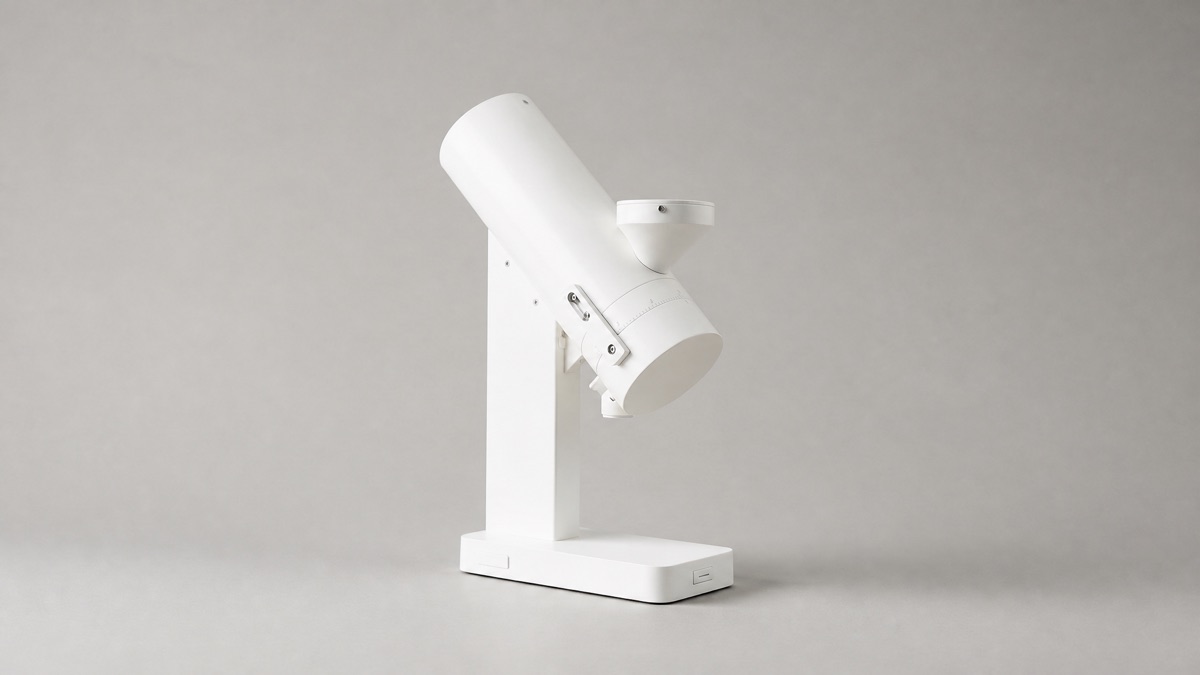
The Acaia Orbit is a 64 mm flat burr single dose grinder from Acaia, the coffee scale brand. It sells for about $1,450 to $1,700. Acaia announced it in October 2021 and shipped it in 2022. It grinds for espresso and filter with a stepless dial, an auto purge and adjustable RPM.
Testing found a narrow particle spread, low heat and about 0.7 g of retention. An 18 g dose takes 18.5 seconds at 1,000 RPM. Grind-by-weight with an Acaia Lunar scale leaves coffee in the chute. Static needs a water spray or the $165 Ion Beam. The Lagom P64 competes at the same price.
So does the precision justify the price? For home baristas who switch between espresso and filter, the answer leans yes. Below, I walk through grind quality, retention and grind-by-weight. No brand sponsored this review.
What Is the Acaia Orbit?
The Acaia Orbit is a premium 64 mm flat burr single dose grinder that sells for about $1,450 to $1,700. Single dosing means coffee goes in one dose at a time, and the grinder empties itself after each grind.
The Orbit handles both espresso and filter coffee. A stepless dial, one with no fixed clicks, moves the burrs in tiny amounts between the two styles. That range suits home baristas who switch drinks during the day.
Buyers who want that range still get a choice of looks. Three finishes are on sale: Space Gray, Black and Beige White. Each finish pairs with any of the three factory burr sets. The motor, body and controls stay the same across all versions.
Whichever version a buyer picks, the same accessories arrive with it. The box holds four things:
- The grinder: This is the main unit. Its body uses aluminum, polycarbonate and stainless steel.
- A 58 mm portafilter dosing cup: A magnetic pad comes with it.
- A fitting tool: The tool fits the Lunar magnetic strips. The scale itself is sold separately.
- A warranty card: The card records the warranty terms.
Once the grinder leaves the box, its footprint decides where it can live. It measures 108 mm wide, 266 mm deep and 394 mm tall (4.3 by 10.5 by 15.5 in). That height leaves about 5.6 cm (2.2 in) of space under standard 45 cm (17.7 in) upper cabinets.
Who Makes the Acaia Orbit?
Acaia is a coffee scale maker that began with the Pearl scale on Kickstarter in 2013 and founded the company in 2014. The Pearl won a Best New Product award at the SCAA Expo that year.
Acaia announced the Orbit in October 2021 and shipped it in 2022. It is the brand's first grinder. Acaia alone handles the manufacturing, sales and support.
Weber Workshops is a grinder maker with a long history of high-end grinders. Acaia designed the Orbit with guidance from Weber Workshops and drew on the Weber EG-1. Acaia co-founder Rex Tseng notes that Acaia built the Weber EG-1 for four years and supplied its electrical engineering.
The first production runs, sold in the US, carried the name Eclipse Edition. The Black and White versions arrived in 2024. Each came with a matching multi-purpose hopper and a metal plate engraved with the name of the installed burrs.
Which Burrs Does the Acaia Orbit Use?
The Acaia Orbit uses 64 mm flat steel burrs, with a choice of Mazzer 33M, SSP Multi-Purpose or SSP Lab Sweet V3. Burrs are the two steel discs that cut the beans, and flat burrs sit face to face. The Mazzer 33M set suits classic espresso and a heavier body.
The two SSP sets pull in a different direction. The SSP Multi-Purpose set favors clarity for light roasts and filter coffee. The SSP Lab Sweet V3 set aims for sweetness across espresso and filter. So one SSP set leans toward lighter, filter-style brewing, while the other spans both brew methods.
Those three sets are the factory choices, but they are not the limit. Other 64 mm SSP burrs also fit the same mount. No burrless version is sold, so the grinder cannot be bought empty.
Burr Options:
| Burr Set | Best For |
|---|---|
| Mazzer 33M | Classic espresso, heavier body |
| SSP Multi-Purpose | Clarity, light roasts, filter |
| SSP Lab Sweet V3 | Sweetness in espresso and filter |
The two names on that list come from separate burr makers. Mazzer is an Italian grinder maker founded by Luigi Mazzer in 1948 near Venice, and it machines its own burrs in-house. SSP is a family-owned South Korean company that makes precision burrs.
Acaia checks each unit after assembly. Burr mounting surfaces must be flat within 10 microns, and motor drive shafts must run true within 20 microns. A micron is one thousandth of a millimeter. Optical imaging of ground coffee then confirms burr alignment, which means a photo check of the grounds themselves.
How Does the Acaia Orbit Work?
The Acaia Orbit works as a single dose grinder: the user weighs the beans, pours them in and grinds the full dose. A knocking chute then taps out the last grounds into the dosing cup.
The Orbit uses a 200 W brushless motor that spins between 600 and 1,500 RPM. RPM Stability Control keeps that speed steady as the bean load drops. Steady speed reduces heat, noise and swings in particle size near the end of a dose.
Speed is one control, and grind size is the other. Grind adjustment is stepless, with a 0.75 mm thread pitch on the dial. Stepless means the dial moves smoothly, with no fixed clicks to land on.
The models differ in how the dial helps a user return to a setting. The Space Gray model adds a detent ring, a set of small notches, to mark favorite settings. The Black and Beige White models use a wider plain dial.
The motor does more than hold one steady speed. It can also change speed during a grind. For example, a profile can start at 600 RPM and rise to 1,200 RPM after 10 seconds. That works like pressure profiling on an espresso machine, where the pressure shifts partway through the shot. The Orbit applies the same idea to grinding.
What Does the Single Button Do?
The single button controls every main function through different press patterns. The button answers to four patterns:
- One press: Grinds with the last profile.
- Double press: Pulses the burrs to release leftover grounds.
- Triple press: Spins the burrs backward and then forward to clear the chamber.
- Long press: Switches between three profiles, shown by a color code.
Some work happens without any press at all. The grinder stops by itself after 3 seconds without beans. It then reverses to purge the chamber.
A built-in light shines on the grounds as they fall, which makes the grind easier to check.
Every control sits at the front, so the grinder also works for someone using a wheelchair.
The press patterns themselves can be changed, and that takes a phone. The free Orbit app, the companion app for this grinder, connects over Bluetooth. It sets the RPM, or how fast the burrs turn, plus the button actions and the three presets. The app needs no login, and it does not show the grind setting, so the dial stays the reference.
How Does Grind-by-Weight Work?
Grind-by-weight pairs the Orbit with an Acaia Lunar scale so the grinder stops at a target dose. Magnetic strips hold the Lunar in place on the grinder base.
That stopping point is not exact, because some coffee never leaves the machine. About 0.7 to 1 g (0.02 to 0.04 oz) stays in the chute until it is tapped out. The gap shows up in practice. One test had to set 17.3 g as the target to end up with an 18 g dose.
The grinder also has to stay plugged in to run at all. It needs mains power and cannot run on a battery. The power cord is removable.
Grind-by-weight works with both the Lunar 2021 and the original Lunar after a firmware update. The companion apps run on iOS and Android, but the app is optional here. The target weight and RPM, or rotations per minute, can be set on the Lunar itself.
How Well Does the Acaia Orbit Grind?
The Acaia Orbit grinds with a narrow particle spread and very little heat. Lab testing found a narrow main peak at 209 microns with the Mazzer 33M burrs. A narrow peak means most of the grounds came out close to the same size.
Speed is moderate. An 18 g (0.63 oz) dose took 18.5 seconds at the default 1,000 RPM. That time places the Orbit among the slower single dose grinders, the machines that grind one shot at a time.
Heat stayed low during testing. The ground coffee measured 32.6 °C (90.7 °F) right after grinding.
Testing also covered how the grinder handles a change in setting. Returning to an earlier setting after a dial change worked easily.
Grind Test Results:
| Measure | Result |
|---|---|
| 18 g dose time | 18.5 seconds at 1,000 RPM |
| Grounds temperature | 32.6 °C (90.7 °F) |
| Main particle peak | 209 microns |
| Measured noise | 76 decibels |
Is the Acaia Orbit Good for Espresso?
Yes. The Acaia Orbit produces very good espresso, especially with the Mazzer 33M burrs. Burrs are the two discs that cut the beans. These ones sit flat and measure 64 mm across. Those 64 mm flat burrs give it an edge over the Niche Zero for light roast espresso.
Espresso is only one part of what the grinder handles. The grind range covers about 0 to 1,400 microns, and a micron is one thousandth of a millimeter. Within that span, a common chart places espresso between 2.5 and 5.0 on the dial. Filter brews sit further along the same dial.
Those dial numbers only help once the markings make sense. Dial positions read as rotations, number and tick. A setting of 1+3.2 means one full rotation, then number 3, then the second tick. The chart below pairs four brew methods with their ranges, and the filter options include the V60, a pour-over cone.
Grind Settings Chart:
| Brew Method | Dial Range |
|---|---|
| Espresso | 2.5 to 5.0 |
| V60 | 5.4 to 9.3 |
| French press | 9.3 to 1+7.3 |
| Cold brew | 1+0.7 to 1+8.7 |
How Much Coffee Does the Acaia Orbit Retain?
The Acaia Orbit retains about 0.7 g (0.02 oz) of coffee in the grinding chamber. That total splits into 0.2 to 0.3 g of temporary and 0.4 g of permanent retention.
A loss in grams means little on its own, so it helps to measure it against a shot. That 0.7 g equals about 4 percent of an 18 g (0.63 oz) espresso dose.
Real use can look even better. One owner measured about 0.1 g of retention per dose after months of daily grinding. The auto purge and the straight grind path keep most of each dose moving out of the chamber.
Whatever coffee does stay behind is easy to recover. Most of it clears with the next purge or a tap on the knocking chute. That chute is the small opening grounds drop through.
How Loud Is the Acaia Orbit?
The Acaia Orbit runs at about 80 to 90 decibels, by Acaia's own rating. Independent testing came in lower, at 76 decibels with the motor spinning at 1,000 RPM, or rotations per minute.
Lower speeds cut the noise further. Slower speeds make less noise, and the Orbit lets the operator dial the RPM up or down. Early risers can grind more quietly. Holding the speed steady helps too, because the motor does not whine as the last beans pass through.
Those decibel figures mean more next to familiar sounds. Normal conversation sits at 60 to 70 decibels. Long or repeated exposure at 85 decibels or more can cause hearing loss. The grinder only runs in short bursts, though, since one dose takes about 20 seconds.
What Do Acaia Orbit Reviews Say?
Acaia Orbit reviews praise the build, the grind quality and the easy single dose workflow. Single dosing means grinding just enough beans for one drink. Testers describe the grinder as robust and a pleasure to use.
That early praise holds up with time. Long-term owners report the same. One owner moved up from a Wilfa Svart and a Niche Zero, two other home grinders. The Orbit delivered more clarity and sweetness in both espresso and pour-over. That comparison shows how the Orbit stands against grinders owners already know well.
Taste is not the only reason for the good reviews. Owners also like the details. The built-in light makes it easy to check grind consistency and cleanliness, and the matte black Eclipse Edition earns praise for its looks next to other bar equipment.
What Are the Common Complaints?
The common complaints cover the price, static, imprecise grind-by-weight and awkward burr access. The burr access problem shows up at cleaning time. Several screws must come out before the burrs can be cleaned.
The rest come from how the machine is built and how it runs. Other gripes involve the app and the motor:
- App dependence: The grinder has only one button. That single control is why advanced features need the app.
- Duty cycle: The duty cycle is the pattern of run time and rest time. This grinder runs 60 seconds, then rests 30 seconds. The pause limits back-to-back batches.
- Early alignment issues: Units built in 2022 and 2023 had alignment issues. Those problems reportedly have been resolved.
How Does the Acaia Orbit Compare With the Lagom P64?
The Acaia Orbit and the Lagom P64 compete at the same price, with different flavor goals. The Lagom P64 sells for about $1,585 to $1,650. The Orbit sells for about $1,450 to $1,700.
The Lagom P64 leans toward clarity and sparkle in the cup, meaning single flavors stand out one by one. The Orbit leans toward a balanced middle instead.
Option-O, a Melbourne company, builds the Lagom P64 around a CNC-machined unibody, a body cut from one solid block. The grinder takes swappable SSP and Mizen burr sets. It also uses a variable-speed motor, so the grind speed can be dialed up or down.
The remaining specs give neither grinder an advantage. Both tie on brew range, retention and quiet operation. The Orbit does add app control and Lunar scale integration. Even so, the choice comes down to the cup a buyer wants.
Acaia Orbit vs Lagom P64:
| Feature | Acaia Orbit | Lagom P64 |
|---|---|---|
| Maker | Acaia | Option-O |
| Price | $1,450 to $1,700 | $1,585 to $1,650 |
| Cup profile | Balanced middle | Clarity and sparkle |
| Burr options | Mazzer 33M, SSP sets | SSP and Mizen sets |
Buyers who pass on both grinders still have options at this price. The Lagom P100, the Kafatek Monolith Max and a used Mazzer Philos all compete for the same buyers.
Is the Turin DF64V a Cheaper Alternative?
Yes. The Turin DF64V is the closest cheaper alternative, with 64 mm flat burrs, single dosing and variable speed. Single dosing means the grinder takes one shot of beans at a time. Variable speed lets the operator slow the burrs down or speed them up. The DF64V suits buyers who want the 64 mm burr ecosystem for less money.
The DF64V Gen 3 lists at $599 and often sells for $499.
The savings come with trade-offs. The DF64V lacks app profiles, automatic purge and Lunar grind-by-weight, which stops the grind at a target weight. Buyers who skip those features lose little.
The money still buys real hardware. Turin builds the Gen 3 around three parts:
- 64 mm Red Titanium burrs: These are the cutting discs that give the grinder its 64 mm size.
- 400 W brushless motor: It reaches 1,800 RPM, or 1,800 turns per minute.
- Plasma ion generator: It works against static.
How Do You Clean the Acaia Orbit?
Cleaning the Acaia Orbit takes a soft cloth and warm water only, with no detergent and no immersion. Chemicals and water baths can damage the grinder.
The burr carrier needs regular attention. Permanent retention builds up on its large surface over time. Reaching it requires loosening several screws.
Daily care is lighter. Letting the auto purge finish clears most grounds. A brush keeps the exit path clean between deep cleans.
Unplugging the grinder comes first before any hands-on cleaning. When moving from a coarse setting to a much finer one, the Reverse-and-Adjust feature turns the burrs backward instead of forcing them through loaded coffee.
Does the Acaia Orbit Have a Static Problem?
Yes. The Acaia Orbit shows pronounced static in testing, so a water spray on the beans helps. A small spray before grinding keeps grounds from clinging.
That spray does real work because of a design choice. Acaia built the grinder around grounding. The company skipped a built-in ion generator, the part that cancels static inside the grinder itself.
For setups where grounding is not enough, Acaia sells the Ion Beam, an add-on that clears static from the grounds. It costs $165 and stays optional. Three conditions make it most useful:
- Ungrounded wall outlets: The Ion Beam helps most with wall outlets that are ungrounded.
- Very dry air: Very dry rooms are the second place the add-on earns its price.
- Ceramic dosing cups: Grinding into a ceramic cup is the third case Acaia points to for the Ion Beam.
How Much Does the Acaia Orbit Cost?
The Acaia Orbit costs about $1,450 to $1,700, depending on the burr set and the seller.
That price covers the grinder by itself, so the extras push the total higher. The Acaia Lunar scale costs about $250 and brings grind-by-weight. Larger hoppers are the containers that hold the beans. They run $50 to $200 for sizes from 250 g to 2 kg (0.55 to 4.4 lb). The Ion Beam adds $165.
Acaia Orbit Costs:
| Item | Price |
|---|---|
| Acaia Orbit | $1,450 to $1,700 |
| Acaia Lunar scale | About $250 |
| Larger hoppers | $50 to $200 |
| Ion Beam | $165 |
The seller also sets what arrives in the box. European sellers ship it with an EU plug, and some include a certified UK conversion plug.
Shops in the United States are the other main source. US sellers include Acaia's own store, Prima Coffee, Chris' Coffee and Espresso Outlet.
Region matters after the sale too, because coverage is not the same everywhere. Acaia backs the grinder with two years of warranty in the US and EU and one year elsewhere.
Is the Acaia Orbit Worth the Price?
Yes. The Acaia Orbit justifies its price for home baristas who use its precision, purge and RPM control. RPM means rotations per minute, the speed at which the grinder's burrs turn. Acaia also backs the grinder with a two-year warranty in the United States and the European Union.
That value depends on actually using the controls. Value drops for simpler needs.
The price looks different again next to other home grinders. The Lagom P64 matches the Orbit at the same price, and the DF64V costs less. Extras raise the gap further. Extras such as the Lunar and the Ion Beam push the real cost higher. That cost sits above the grinder's own price tag.
Is the Acaia Orbit Worth It?
Yes. The Acaia Orbit is worth it for home baristas who want one precise grinder for espresso and filter. Its low retention, auto purge and RPM control stand out in the class. Low retention means few grounds stay stuck inside the grinder. Auto purge clears the leftover grounds on its own. RPM control sets how fast the burrs spin.
The drawbacks matter too:
- Price: The price is high.
- Static: Static needs managing.
- Grind by weight: Grind-by-weight misses the target dose.
Buyers who never open the app can save money with a simpler single dose grinder.
Many owners reach the Orbit after a Niche Zero or a DF64. Those who outgrow it usually move to a Weber EG-1 or a Kafatek Monolith Flat, at roughly double the price.
Who Should Buy the Acaia Orbit?
The Acaia Orbit suits home baristas who switch between espresso and filter, Lunar owners and RPM tinkerers. The workflow rewards people who weigh every dose, so these users get the most out of it.
That same workflow becomes a drawback for buyers with different habits. Three groups should look elsewhere:
- Budget buyers: Shoppers who want to spend less have better options than the Orbit.
- High-volume users: People who weigh dose after dose all day are better served by another scale.
- Buyers who want plug-and-play simplicity: Plug-and-play means a scale that works right away, with no setup or fiddling. Anyone who wants that should pick a different scale.
The choice comes down to how much a buyer values weighing every dose.
The Coffee Experiment is a reader-supported platform. Purchases made through our links may earn us an affiliate commission at no extra cost to you.