
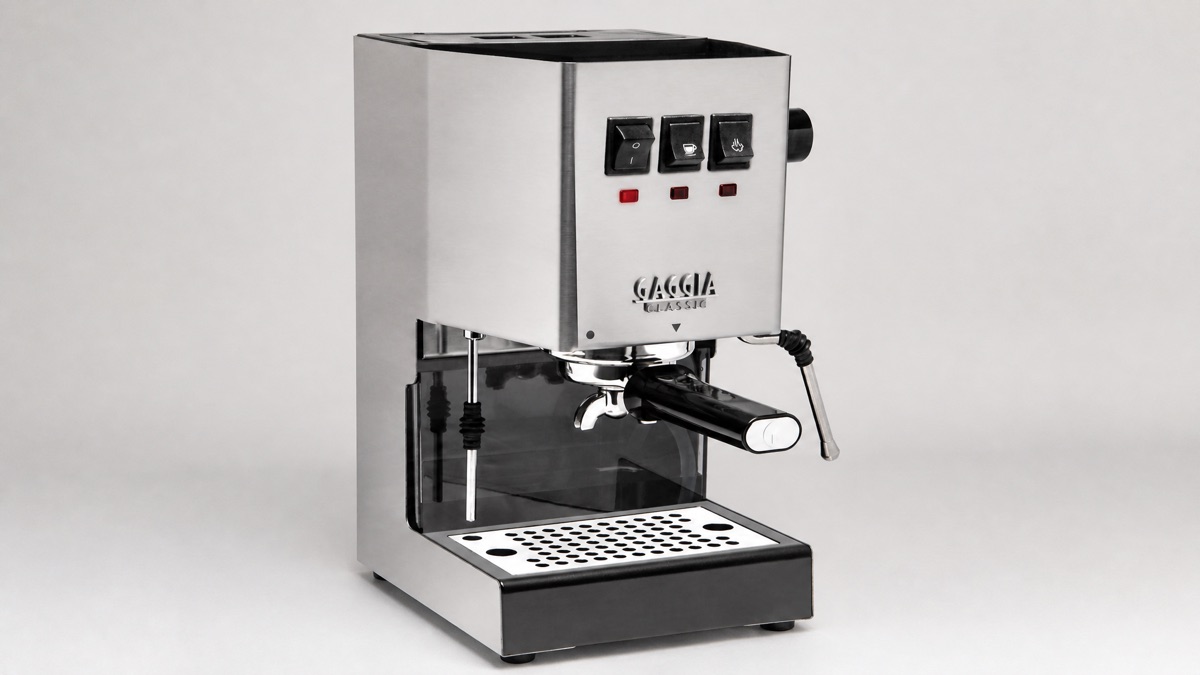
Welcome, coffee friend, I'm Mark. I know the Breville Barista Express well from café and home setups. A Gaggia coffee machine is an Italian espresso maker sold in two tiers. Super-automatics grind, dose and brew at a button press, while manual models such as the Classic Pro use a portafilter. Prices run from about $457 to $1,999.
Every super-automatic has a ceramic burr grinder, and the Prestige models add an integrated milk carafe. Cleaning is easy because the brew unit comes out. Drinks can arrive lukewarm, though, and the Brera steam wand is fragile. Manual models need a separate grinder and some skill.
The Classic Pro earns its place as a first real espresso machine. The Magenta Prestige and Cadorna Prestige lead the one-touch range. I lay out milk frothing, descaling and price. No brand reviewed my words first.
What Is a Gaggia Coffee Machine?
A Gaggia coffee machine is an Italian espresso maker, sold as a bean-to-cup super-automatic or a manual portafilter model. The Gaggia company dates to 1947. The lineup splits into a hands-off tier and a hands-on tier.
Achille Gaggia set out to fix weak espresso in 1930s Milan. His patents replaced steam with hot water pressure and produced crema. The company began with commercial machines.
Gaggia filed a steam-free patent in 1938 and a lever-piston patent in 1947. The lever-piston design drove a spring-loaded piston by hand. The brand credits its early patents with the crema on espresso.
Home machines followed from the 1970s. The Gaggia Classic launched in 1991 and remains the best known manual model. Later the company shifted its focus toward fully automatic machines, though a few manual models remain.
The Espresso series is built at the Gaggio Montano factory near Bologna, Italy. The series comes in Style, Deluxe and Evolution versions. Each machine carries a Made in Italy mark.
Ownership changed over time. Saeco bought Gaggia in 1999 and Philips bought Saeco in 2009. Philips sold the Saeco Professional division and the Gaggia brand in 2017 to the company now called Evoca Group.
A super-automatic, also called a bean-to-cup machine, grinds, doses and brews at a button press. A semi-automatic such as the Classic Pro needs a portafilter, a separate grinder and a user who tamps. This article covers the home machines only.
Which Gaggia Coffee Machine Models Exist?
The Gaggia coffee machine models split into twelve super-automatics and a smaller set of manual machines. The Classic Pro is the best known manual model. The super-automatics cover a wider price range.
The super-automatic names are Accademia, Anima, Anima Prestige, Besana and Brera. The Cadorna family adds Barista Plus, Milk and Prestige versions. Magenta Plus, Magenta Prestige, Velasca and Velasca Prestige complete the list.
Super-automatic models:
- Accademia
- Anima and Anima Prestige
- Besana
- Brera
- Cadorna Barista Plus, Cadorna Milk and Cadorna Prestige
- Magenta Plus and Magenta Prestige
- Velasca and Velasca Prestige
Manual machines include the Classic Pro, the Espresso series (Style, Deluxe and Evolution), the Carezza and the Viva. The Classic Pro is the most popular. Every manual model needs a separate grinder.
The model names signal the milk system. Prestige models carry an integrated milk carafe. Plus, Milk and Deluxe versions use a steam wand or a simpler milk unit.
How Does a Gaggia Coffee Machine Work?
A Gaggia coffee machine works by pushing hot water through ground coffee under pump pressure. Super-automatics do the grinding, dosing and brewing alone. Manual machines hand those steps back to the user.
A super-automatic grinds fresh beans for each cup. The machine wets the grounds first, then brews with a pump rated at 15 bar. One touch starts the whole cycle. The Anima Prestige hopper holds 8.8 oz (250 g) of beans.
A manual machine works through a portafilter, the handle that holds the coffee. The user doses and tamps the coffee by hand. The Classic Pro offers pressurized and non-pressurized baskets for its 58 mm (2.3 in) portafilter. On the Classic Pro, one boiler heats both brewing water and steam, so the machine switches between the two modes.
Pre-infusion is automatic on the super-automatics and the Espresso series. It wets the grounds for a few seconds before full pressure arrives. The water then releases aroma more evenly. The Espresso series adds a PID controller, a device that holds the boiler temperature steady.
The 15 bar figure is the pump rating, not the pressure at the coffee. An Ulka vibratory pump supplies the force. An over-pressure valve (OPV) caps the pressure that reaches the coffee. The Classic Evo Pro ships with the OPV set to 9 bar.
Does a Gaggia Coffee Machine Include a Grinder?
Yes. A Gaggia coffee machine includes a ceramic burr grinder when it is a super-automatic model. Manual models such as the Classic Pro include no grinder.
Every super-automatic carries ceramic burrs, which wear slowly. The Cadorna Prestige uses a conical ceramic grinder. Most other models use flat ceramic burrs.
The Cadorna Prestige has 10 grind settings. The Anima Prestige and the Brera offer five each. Some rival machines offer between 8 and 30 settings, so the Gaggia range is narrow by comparison.
Most Gaggia super-automatics have a bypass chute for pre-ground decaf. Manual models have no built-in grinder, so they need a separate one. The Classic Pro and the Espresso series ship without one.
How Much Does a Gaggia Coffee Machine Cost?
A Gaggia coffee machine costs between about $457 and $1,999 in the US. The manual Classic Pro sits at the bottom of that range. The Accademia flagship sits at the top.
Mid-range super-automatics run from $499 to $1,000. The Brera sells for $499 to $602 and the Velasca Prestige for $750. The Magenta Prestige costs $859.55 and the Cadorna Prestige $999.99.
A manual Gaggia costs more than its sticker price. The user adds a grinder, a tamper and a scale. A grind-by-weight grinder such as the Eureka Mignon Libra costs more than the Classic Pro.
Prestige super-automatics undercut rival one-touch machines. Gaggia holds the mid-range, while Jura and Miele hold the top end. The Cadorna Prestige carries a lower price than similar machines from other makers.
Three things set the price. A built-in grinder, an integrated milk carafe and a second boiler each raise it. The Accademia is the only model in the lineup table with two boilers.
Upkeep adds a yearly cost on the super-automatics. Gaggia Decalcifier and an Intenza+ water filter are the named consumables. The Classic Pro needs neither a filter nor tablets.
Which Gaggia Coffee Machine Costs the Least?
The Gaggia coffee machine that costs the least is the manual Classic Pro, at $457 to $549. The price varies with the revision and the store. The Classic Pro has no grinder.
Because the Classic Pro has no grinder, a separate one must be bought. A beginner buys that grinder before the first shot. The final bill then moves closer to the cost of a super-automatic.
The Brera is the cheapest super-automatic, at $499 to $602. A grinder is built in, so no extra purchase is needed. The machine makes two drinks, espresso and lungo. A manual steam wand froths the milk.
Milk handling is what separates the pricier models. The Magenta Plus costs $699 and uses a steam wand. The Magenta Prestige costs $859.55 and adds an integrated milk carafe. The two differ by $160.55 and by the milk system.
Gaggia prices and milk systems:
| Model | Milk system | Price |
|---|---|---|
| Classic Pro | Steam wand | $457-$549 |
| Brera | Steam wand | $499-$602 |
| Magenta Plus | Steam wand | $699 |
| Velasca Prestige | Integrated carafe | $750 |
| Magenta Prestige | Integrated carafe | $859.55 |
| Cadorna Prestige | Integrated carafe | $999.99 |
How Good Is Gaggia Coffee Machine Espresso?
Gaggia coffee machine espresso is steady on the super-automatics and complex once a Classic Pro user learns the machine. Results depend on the model.
The Brera pulls a standard shot in about 25 to 30 seconds. Pre-infusion wets the grounds first, which evens out extraction. The crema comes out thin to medium.
The Anima Prestige offers five strength levels and three temperatures. The first two shots taste weak. The third shot tastes right. The best starting settings are highest intensity, highest heat and the finest grind.
The Classic Pro makes strong espresso but demands technique. The machine has no PID controller, which is a device that holds water temperature steady. Users therefore time each shot against the heating cycle. That method is called temperature surfing. A 9 bar OPV spring replaces the stock spring and lowers the pressure from the 12 to 15 bar range.
Among the Gaggia models compared here, only the Accademia has two boilers. The flagship also adds a ceramic flat burr grinder and a 15 bar pump.
Is Gaggia Coffee Machine Coffee Hot Enough?
No. Drinks from an automatic Gaggia coffee machine often arrive less hot than buyers want. Lukewarm coffee is a common complaint about the super-automatic range.
Some models let the user fix this with a setting. The Anima Prestige, Magenta Prestige and Cadorna Prestige each offer three coffee temperature levels. The highest level gives the hottest cup. The Velasca offers the same three levels.
The Classic Pro has no temperature menu, so the setting cannot fix a cool cup. Cup heat depends on the timing of each shot against the boiler cycle. Users learn to start the shot at the right point in the cycle.
The Espresso series uses a PID controller. The controller holds the boiler temperature steady during brewing and during milk frothing. Stable boiler heat keeps every shot at the same temperature.
How Good Is Gaggia Coffee Machine Milk Frothing?
Gaggia coffee machine milk frothing is best on the Prestige models and workable on the steam wand machines. The carafe versions do the work alone. The wand versions reward practice.
The integrated carafe on a Prestige model makes fine microfoam. The milk comes out neither scorched nor over-aerated. The carafe runs a cleaning cycle after each use.
- Brera: The Brera has a manual steam wand. After some practice, the wand makes decent microfoam for lattes and cappuccinos. The wand feels flimsy and can loosen after months of regular use.
- Classic Pro: The Classic Pro has a commercial-style steam wand. Frothing milk is tricky, but microfoam is manageable. A single boiler cannot brew and steam at once, so each milk drink adds a waiting step.
- Espresso series: The Espresso series uses a pannarello wand. The new Espresso series has a steadier steam jet and a wider range of motion, and both improve the foam.
Does a Gaggia Coffee Machine Have an Automatic Milk Carafe?
Yes. A Gaggia coffee machine has an automatic milk carafe on every Prestige model. The Anima, Magenta, Cadorna and Velasca Prestige versions all include one.
The Anima Prestige carafe holds 17 oz (500 ml) of milk, enough for 4 to 5 drinks. The carafe lives in the fridge between drinks. A quick clean runs hot water through the froth circuit and leaves the stored milk untouched.
The Brera and the standard Velasca use a manual steam wand instead. The Plus and Milk versions of other lines also drop the carafe. Each swaps it for a steam wand or a simpler milk unit.
The Accademia offers both systems. Its milk setup pairs an integrated carafe with a manual steam wand.
How Hard Is a Gaggia Coffee Machine to Clean?
A Gaggia coffee machine is easy to clean because the brew unit and the trays come out. Daily care takes a few minutes. Deep cleaning happens about once a month.
Because the brew unit is removable, it rinses under the tap. The Anima Prestige needs that rinse once a week. Removable parts mean no special tools are needed.
Milk drinks leave residue, so the steam wand on the Brera needs a wipe after each one. Dried milk blocks the nozzle if the wipe is skipped. The drip tray also needs emptying before it overflows.
A monthly cleaning tablet clears the Brera group head. The Anima Prestige adds a quick clean for the milk circuit after each drink. A tap on the check mark starts it.
Spare parts are easy to find. Replacement brew groups, seals and filters come through retailers. Gaskets and seals for the Classic Pro are cheap to replace.
Gaggia Decalcifier is the descaling product named for Gaggia machines. Vinegar is a poor substitute, because scale holds on to its taste. The brew unit never goes in the dishwasher, because hot water can warp it.
How Often Does a Gaggia Coffee Machine Need Descaling?
A Gaggia coffee machine needs descaling every two to three months on the Brera, depending on water hardness. Descaling keeps mineral buildup out of the boiler and the pipes.
Hard water carries more minerals, so it leaves more scale inside the boiler and pipes. Softer water leaves less, so the interval grows longer. A descale warning tells the owner when the time arrives. The Intenza+ water filter comes out of the tank before descaling.
The Anima Prestige guides the owner through the descaling cycle step by step. A notification light flags the need. The water reservoir also holds a filter, which cuts how often descaling comes up.
Super-automatic models react to mineral buildup more than the Classic Pro. Their internal parts are more sensitive to scale. The Classic Pro has simpler plumbing, so scale affects it less.
What Problems Does a Gaggia Coffee Machine Have?
A Gaggia coffee machine has three common problems: lukewarm drinks, a fragile steam wand and a steep manual learning curve. Each problem hits a specific tier.
The Brera steam wand feels fragile and can loosen after months of regular use. Gentle handling slows the wear.
The Classic Pro uses one boiler for brewing and steaming. The machine cannot do both at once. Units without a PID also drift in temperature, which calls for temperature surfing.
The Anima Prestige and the Brera offer five grind settings each. Some rivals offer 8 to 30. The narrow range limits fine tuning.
No Gaggia machine has an app. Manual models also carry a steep learning curve.
Is a Gaggia Coffee Machine Durable?
Yes. A Gaggia coffee machine is durable enough for daily home use, led by the Classic Pro. The super-automatics last well when descaled on schedule.
The Classic Pro has a brass group head and a steel body. The E24 revision added a larger brass boiler. Standard 58 mm (2.3 in) parts make repairs simple. A worn part can be swapped instead of the whole machine.
Ceramic burrs in the super-automatics wear slowly. Many models also use stainless steel front panels. The Brera build sits in the middle ground, and its steam wand shows wear first.
Warranty terms are short, which is worth knowing when a buyer plans for long use. The super-automatics carry 1 year of cover. The Classic Pro carries 2 years.
How Does a Gaggia Coffee Machine Compare With Rivals?
A Gaggia coffee machine compares well on price against rivals such as Breville, De'Longhi and Philips. The match depends on the tier. Manual and super-automatic models face different competitors.
The Rancilio Silvia costs $995 and uses a 12 oz (355 ml) brass single boiler. The Classic Pro has a similar single-boiler design at a lower price. The Lelit Anna PID adds the temperature control that the Classic Pro lacks.
De'Longhi covers both tiers, as Gaggia does. Against the Brera and Anima Prestige, equivalent De'Longhi models match closely on features and price. The choice comes down to the milk system and available deals.
Jura and Miele hold the top end of the super-automatic market, and Gaggia costs less than both. Saeco and Philips share history with Gaggia, so the brands overlap.
The Philips 3200 with LatteGo measures 9.75 x 17 x 14.5 in (24.8 x 43.2 x 36.8 cm). The Anima Prestige measures 8.7 x 16.9 x 13.4 in (22.1 x 42.9 x 34 cm). The Philips hopper holds 10 oz (283 g) against 8.8 oz (250 g) for the Gaggia.
Rival machines compared:
| Machine | Price | Detail |
|---|---|---|
| Rancilio Silvia | $995 | 12 oz (355 ml) brass single boiler |
| Breville Barista Express | $699.95 | Built-in conical burr grinder |
| Philips 3200 with LatteGo | Not listed | 10 oz (283 g) hopper |
| Gaggia Anima Prestige | Not listed | 8.8 oz (250 g) hopper |
Is a Gaggia Coffee Machine Better Than a Breville?
No. A Gaggia coffee machine is not strictly better than a Breville, because each wins on different points. Neither brand beats the other across the board.
The Breville Barista Express has a built-in conical burr grinder and lists at $699.95. The Classic Pro has no grinder. The Breville costs more for that convenience.
Breville machines add built-in features such as integrated grinders and digital displays. The Classic Pro stays simple. Its standard 58 mm (2.3 in) portafilter opens a wide market of aftermarket baskets and tampers.
The Breville Oracle Touch is a hands-on hybrid, not a one-button super-automatic. The Brera and Anima Prestige are true bean-to-cup machines. The two types do not compare directly.
Is a Gaggia Coffee Machine Worth It?
Yes. A Gaggia coffee machine is worth it for buyers who want Italian build and fair prices, with a few trade-offs. The right model depends on how much work the buyer wants to do.
The strengths are consistent. Ceramic burr grinders sit in every super-automatic. The menus are intuitive. Prices undercut Jura and Miele.
The weaknesses are equally consistent. Drinks can arrive lukewarm, the Brera steam wand is fragile, no model has an app, and manual models are hard to learn.
Three picks stand out. The Magenta Prestige is the best value at $859.55. The Cadorna Prestige is the best performer at $999.99. The Classic Pro is the best route into espresso at $457 to $549.
The total cost differs from the sticker price. The Classic Pro at $457 to $549 needs a grinder, a tamper and a scale. The super-automatics add Gaggia Decalcifier, cleaning tablets and water filters.
Budget sets the pick. Under $550 the Classic Pro suits hands-on users and the Brera suits one-touch buyers. The Velasca Prestige at $750 and the Accademia at $1,999 fill the middle and top of the range.
Pros:
- Ceramic burr grinders in every super-automatic
- Intuitive menus
- Prices below Jura and Miele
- Fine microfoam from Prestige carafes
Cons:
- Drinks that can arrive lukewarm
- A fragile Brera steam wand
- No app on any model
- A hard learning curve on manual models
Who Should Buy a Gaggia Coffee Machine?
A Gaggia coffee machine suits anyone ready to buy one-touch coffee or a first real portafilter. Beginners gain the most. The brand covers both ends of the effort scale.
Households that share a machine gain most from the Prestige models. The Cadorna Prestige stores four user profiles. The Anima Prestige memorizes four drink recipes.
Small kitchens suit the Anima Prestige. The machine is 8.7 in (22 cm) wide and weighs under 20 lb (9 kg).
Buyers who want app control or a guaranteed piping-hot cup look elsewhere. Enthusiasts chasing barista-level control look at the Breville Dual Boiler.
The Coffee Experiment is a reader-supported platform. Purchases made through our links may earn us an affiliate commission at no extra cost to you.