
Thanks for clicking, I'm Mark. In 2015, La Marzocco launched the Linea Mini, and I have tracked espresso grinders closely since.
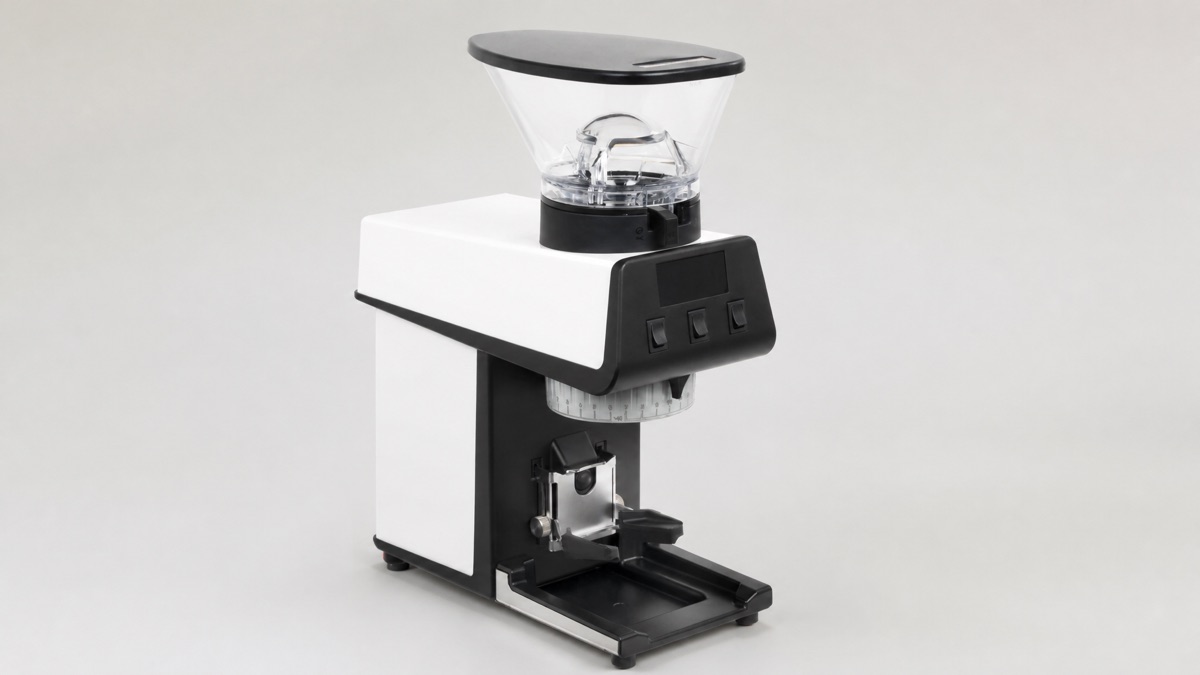
The La Marzocco coffee grinder line covers the Pico for homes and the Swan, Jay and Swift for cafés. The Pico is a 39 mm (1.5 in) conical grinder that launched in September 2023 and now costs $1,150. La Marzocco builds it to sit beside the Linea Mini and Linea Micra.
The Pico runs quiet at just under 73 dB. Its dose varies by only 0.07 g, and it retains just 2.2 g (0.08 oz). Single dosing loses 1.6 g (0.06 oz), and the cup turns out heavy and chocolatey. Light roasts lose clarity. The commercial models run from $2,395 to $7,050.
So is the grinder worth it? For Linea owners who drink body-forward espresso, the answer leans yes. Other buyers find larger burrs and single-dose designs for less money. I tackle noise and dose consistency, single dosing and retention and commercial Swan and Jay models. I tried it myself, and nobody at La Marzocco saw this before you did.
Does La Marzocco Make a Coffee Grinder?
Yes. La Marzocco makes its own coffee grinders, led by the Pico home grinder that launched in September 2023. The Italian espresso machine maker added the commercial Swan in April 2024 and the commercial Jay in October 2025.
The company began in Florence in 1927 as a workshop run by the Bambi brothers, Giuseppe and Bruno. Grinders came much later. La Marzocco and Mazzer released the Lux D home grinders around 2015.
In 2019 La Marzocco previewed the Swift Mini, a home grinder, at HOST Milano. The Swift Mini used 32 mm (1.3 in) conical burrs and automatic dosing and tamping. Its hopper held 0.25 kg (8.8 oz) of beans.
The Pico took a long road. Work on it began when La Marzocco Home started in 2014. The maker tested it at Accademia del Caffè Espresso. The grinder launched on September 19, 2023.
The Swan reached the market as a commercial grinder designed in-house. The company showed it at SCA Expo in Chicago in April 2024. The Swan takes its muscular lines from the KB90 espresso machine.
La Marzocco Home also sells grinders built by Mazzer. The list includes the Lux D, the Philos, the Mini Electronic and the Super Jolly V UP. Mazzer builds these models, not La Marzocco.
Which La Marzocco Grinders Can You Buy?
The La Marzocco grinders you can buy cover one home grinder, three commercial grinders and four Mazzer models. The Pico serves the home. The Swan, Jay and Swift serve cafés.
The Pico costs $1,150 on the La Marzocco Home site. It is the in-house home grinder in the range. Its looks match the Linea Mini and the Linea Micra, so it pairs with those machines.
The three commercial grinders differ in burr type, price and features. The Jay has 68 mm (2.7 in) flat burrs. A US dealer lists it at $2,395, although La Marzocco announced no Jay price at launch. The Swan has 83 mm (3.3 in) conical burrs. US dealers list it at $4,200 to $4,700.
The Swift costs the most, at $7,050 from a US dealer. It uses flat ceramic burrs. It grinds, doses and tamps. Two 4.4 lb (2 kg) hoppers hold two coffees at once.
La Marzocco Home also lists four Mazzer grinders. The Lux D costs $1,095 and the Mini Electronic costs $1,385. The Philos costs $1,595, and the Super Jolly V UP costs $1,645. Mazzer specifies flat burrs for the Super Jolly (64 mm, or 2.5 in) and for the Lux (61 mm, or 2.4 in). The Mini Electronic carries 64 mm flat burrs as well.
La Marzocco Grinder Lineup:
| Grinder | Use | Burrs | Price |
|---|---|---|---|
| Pico | Home | 39 mm (1.5 in) conical | $1,150 |
| Jay | Commercial | 68 mm (2.7 in) flat | $2,395 |
| Swan | Commercial | 83 mm (3.3 in) conical | $4,200 to $4,700 |
| Swift | Commercial | Flat ceramic | $7,050 |
How Does the La Marzocco Pico Grinder Work?
The La Marzocco Pico grinder works by turning an inverted 39 mm (1.5 in) conical burr set with a brushless induction motor. The burrs turn at 700 to 800 rpm. A sound-dampened housing keeps the noise low.
The grinder doses by portafilter, the handled basket that holds coffee for the espresso machine. A magnetic fork holds the portafilter under the chute. Setting the portafilter on the fork starts the grind. The grinder stops after the programmed dose, so the whole step is hands free.
Three buttons sit on the front. Two buttons store a single dose and a double dose. The third button runs the grinder by hand. A small display shows the stored setting only while a button is pressed.
Grind size is set in steps. Main notches run along a visible scale, with finer steps between them. Adjustment happens from the front of the grinder. Returning to an earlier setting gives the same grind time and amount.
The beans reach the burrs from an auto-close hopper that holds 10.5 oz (300 g). The hopper closes on its own, so switching between coffees stays mess free. The shaft between the burrs and the hopper holds only about 9 g (0.3 oz) of coffee.
What Are the La Marzocco Pico Grinder Specs?
The La Marzocco Pico grinder specs list a size of 15.35 in (39 cm) tall, 6.06 in (15.4 cm) wide and 11.22 in (28.5 cm) deep. La Marzocco lists the weight at 17.2 lb (7.8 kg). Kaffeemacher, a German coffee retailer, weighed its own unit at 8.3 kg (18.3 lb).
The grinder runs on a motor that draws 300 to 350 W on 110 V single phase power. That motor turns 39 mm (1.5 in) steel cone burrs, the parts that crush the beans. La Marzocco rates the output at 1.5 to 1.7 g per second.
Measured speed ran slightly higher. The Pico ground 20.5 g (0.7 oz) in 10 seconds and 18 g (0.6 oz) in about 9 seconds.
The hopper holds 0.66 lb (300 g) of beans.
The box includes a dosing cup and a magnetic portafilter fork. The portafilter is the handle that holds the coffee in the machine. The fork clamps 58 mm (2.3 in) portafilters. The Pico comes in black, white and other colors.
Key Specs:
| Spec | Detail |
|---|---|
| Burrs | 39 mm (1.5 in) inverted steel conical |
| Motor | 300 to 350 W brushless induction |
| Hopper | 10.5 oz (300 g) |
| Size | 15.35 by 6.06 by 11.22 in (39 by 15.4 by 28.5 cm) |
| Weight | 17.2 lb (7.8 kg) |
| Portafilter | 58 mm (2.3 in) magnetic fork |
| Price | $1,150 |
How Well Does the La Marzocco Coffee Grinder Perform?
The La Marzocco coffee grinder performs well on noise, dose repeatability and retention, and poorly on flavor range. Kaffeemacher tested the Pico as the 52nd grinder in its measurement protocol.
The strengths are measurable. The dose varied by only 0.07 g, and the noise stayed just under 73 dB. Temporary retention measured 2.2 g (0.08 oz). The grind setting returned to the same point after a change.
The weaknesses are measurable too. Ground coffee warmed from 37 °C (98.6 °F) to 38.7 °C (101.7 °F) over six grinds. Fines reached about 27 percent. Single dosing lost 1.6 g (0.06 oz) per grind.
Speed sits in the middle of the tested field. The Pico ground 18 g (0.6 oz) in about 9 seconds. The tester called that a decent, everyday-practical pace, neither fast nor slow.
Measured Results:
| Measure | Result |
|---|---|
| Dose spread | 0.07 g standard deviation at 18 g (0.6 oz) |
| Noise | Just under 73 dB |
| Retention | 2.2 g (0.08 oz) |
| Single-dose loss | 1.6 g (0.06 oz) |
| Grind temperature | 37 to 38.7 °C (98.6 to 101.7 °F) |
| Fines | About 27 percent |
| Speed | 20.5 g (0.7 oz) in 10 seconds |
How Quiet Is the La Marzocco Pico Grinder?
The La Marzocco Pico is quiet, measuring just under 73 dB. The test placed it among the quietest espresso grinders in the home segment. A brushless induction motor and a sound-dampened design earn that result.
The housing has few openings, so the noise stays inside. Buyers in buildings with thin walls get the most from that design. A first coffee on Sunday morning wakes no one.
The same closed housing breathes poorly, so heat builds inside. Ground coffee started at 37 °C (98.6 °F). It reached 38.7 °C (101.7 °F) after six grinds at 30-second intervals.
Taste changes appear from about 40 °C (104 °F) in this test. The Pico stays under that line but comes close in continuous use. Five grinds in the morning cause no trouble. High-frequency service does not suit the Pico.
How Consistent Is the La Marzocco Pico Grinder Dose?
The La Marzocco Pico dose is consistent, with a standard deviation of 0.07 g at an 18 g (0.6 oz) target. Readings landed between 17.9 and 18.0 g. Only one outlier reached 17.8 g.
The Pico doses by time, not by weight. La Marzocco itself notes that bean density and humidity can shift time-based dosing. Grind-by-weight removes that drift.
The Pico pairs with the La Marzocco Connected Scale through the La Marzocco app. The grinder stops at the target weight, sometimes after a short micro-grind. A dosing cup or a grind-by-weight portafilter mod holds the coffee.
Grind settings repeat as well. The tester moved from the espresso setting to coarse and back. Grind time, dose weight and particle curves matched, with a median of about 320 micrometers both times.
What Does the La Marzocco Pico Grinder Taste Like?
The La Marzocco Pico taste is creamy and heavy, with cocoa and chocolate notes. A blind tasting used a naturally processed Brazilian espresso. Acidity receded in the cup, and the shot leaned dark and body-forward.
The grinder's particle data looked like a poor sign for that result. At the espresso setting, the median particle measured about 320 micrometers. The main peak spanned 346 to 350 micrometers. Fines, the tiny particles under 100 micrometers, made up about 27 percent. That is a broad spread of sizes.
The curve predicted a sour, scattered shot. The cup said otherwise. The tester explains that the high share of fines masks sharp acidity and pushes body forward.
Dark and classic roasts suit the Pico best. Delicate, light and fruity coffees lose clarity because the range is narrow. For that reason, the tester rated the espresso potential as rather poor.
Is the La Marzocco Coffee Grinder Good for Single Dosing?
No. The La Marzocco coffee grinder loses 1.6 g (0.06 oz) of coffee in single dosing over a 30-second grind. The Pico works as a hopper-fed dosing grinder.
La Marzocco ships a dosing cup and a matching holder, so the grinder can run single doses. Some coffee stays inside the machine, though. The practical result is a swap of retained coffee, not a gram-accurate dose. A bean switch stays clean, but the output does not match the input.
Bean switching works well instead. The shaft between the burrs and the hopper holds about 9 g (0.3 oz) of coffee. Only that amount needs grinding out when a new coffee goes in. The low figure makes the hopper workflow easy.
The hopper removes with a simple turn. A dosing cup and holder cover single-dose runs. The burrs are also simple to reach, which makes cleaning easy.
How Much Coffee Does the La Marzocco Pico Grinder Retain?
The La Marzocco Pico retains 2.2 g (0.08 oz) of coffee after a grind. The retention is all temporary. Permanent retention measured 0 g, so absolute retention also equals 2.2 g.
The inverted conical design keeps retention low. Coffee falls straight down the chute. Only a little sticks to the star that holds the inner cone. The Pico has no crevices where grounds can collect.
A small amount of leftover coffee matters little on a 20 g (0.7 oz) basket. The 2 g left from the last extraction has barely any taste impact. The tester calls the value good for a dosing grinder, though not very good.
Other measurements list about 1.5 to 1.75 g (0.05 to 0.06 oz) retained. The two figures agree within a fraction of a gram. Either way, the Pico holds back little coffee.
What Are the La Marzocco Swan and Jay Grinders?
The La Marzocco Swan and Jay are commercial espresso grinders built for busy coffee bars. The Swan launched in April 2024. The Jay followed in October 2025 and fits beside a Swan on the bar.
The Swan uses an 83 mm (3.3 in) conical burr driven by a belt. The belt keeps the motor away from the burrs, which reduces heat. The Swan grinds four grams per second and needs 10 burr rotations for an output that other grinders match in 110.
An electrical field removes static, and the Swan has no grinding chamber. Grounds fall straight from the burrs into the portafilter. Retention stays near 0.2 g (0.007 oz). The Swan doses by counting burr revolutions, not by time.
The Swan hopper holds 3.75 lb (1.7 kg) of beans. A US dealer lists it for 120 V power. Grind speeds run at 100, 150 and 200 rpm.
The Jay uses 68 mm (2.7 in) flat burrs mounted from behind. The mounting leaves no screw cutouts on the cutting face and adds nearly 15 percent more cutting surface. The burr chamber tilts at 45 degrees, so coffee exits easily and less stays inside.
The Jay grinds 18 g (0.6 oz) in 4 to 4.5 seconds. Two preset timer buttons and a continuous button run it. A magnetic burr carrier lifts out in seconds for cleaning. Local La Marzocco sales reps handle orders.
La Marzocco unveiled the Jay at its Out of the Box event in Milan, alongside the HostMilano expo. The Jay hopper holds 2.2 lb (1 kg) of beans. The grinder measures 18.4 by 8 by 14 in (46.7 by 20.3 by 35.6 cm) and runs on 120 V.
The Jay supports grind-by-weight with the optional Connected Scale. Removing the scale returns the grinder to timed dosing at the last grind-by-weight time. The Jay burr system is proprietary and takes no third-party 68 mm burrs.
Swan Versus Jay:
| Spec | Swan | Jay |
|---|---|---|
| Launch | April 2024 | October 2025 |
| Burrs | 83 mm (3.3 in) conical | 68 mm (2.7 in) flat |
| Hopper | 3.75 lb (1.7 kg) | 2.2 lb (1 kg) |
| Dosing | Burr revolutions | Timer presets or grind-by-weight |
| US price | $4,200 to $4,700 | $2,395 |
Can the La Marzocco Swan Grinder Work at Home?
Yes. The La Marzocco Swan grinder works at home only for buyers with a commercial budget and open counter space. La Marzocco builds and prices it as a café grinder.
The Swan stands 54.1 cm (21.3 in) tall. That height clears no standard 45 cm (17.7 in) upper cabinet. It needs a counter with open space above it. The footprint measures 23 by 47.8 cm (9.1 by 18.8 in).
US dealers list the Swan at $4,200 to $4,700. That is far above the price of home grinders. Home enthusiasts ask why a cheaper grinder such as the Fellow Ode would not do. The Swan targets cafés running La Marzocco machines.
The Swan also has little long-term owner history at home. Dosing starts through portafilter contact, a newer design than a simple button. Stepless adjustment and a new interface also mean some relearning for owners of La Marzocco machines.
How Much Does a La Marzocco Coffee Grinder Cost?
A La Marzocco coffee grinder costs $1,150 for the Pico, $1,095 to $1,645 for the Mazzer models and $7,050 for the Swift. Home buyers land in the first two groups.
The Pico launched at $995 in September 2023. La Marzocco Home now lists it at $1,150. That rise adds $155, or about 16 percent. A 15 percent bundle discount with a Linea Mini or Micra applied at launch.
La Marzocco Home also sells grinders made by Mazzer. The Lux D costs $1,095. The Mini Electronic costs $1,385. The Philos costs $1,595, and the Super Jolly V UP costs $1,645.
The Swan costs $4,200 to $4,700 at US dealers. The Jay costs $2,395 at a US dealer. La Marzocco announced no Jay price at launch.
Some of these grinders weigh the ground coffee to measure each dose. That feature is called grind-by-weight, and it needs the La Marzocco Connected Scale. The scale costs $400 on the La Marzocco Home site. The Pico and the Jay both use it, so buyers of either add that cost.
The Swift is built for businesses rather than homes. It is commercial equipment that grinds, doses and tamps. A US dealer lists it at $7,050. Commercial buyers also get NSF and UL approval and a choice of 110 V or 220 V models.
Warranty terms vary by country. In New Zealand, La Marzocco Home covers the Pico under a return-to-base warranty. That means the owner sends the grinder in for repair. Non-consumable parts carry 24 months from dispatch. Labor carries 12 months, with the first 30 minutes included.
Price Summary:
| Grinder | Price |
|---|---|
| Pico | $1,150 |
| Lux D by Mazzer | $1,095 |
| Mini Electronic | $1,385 |
| Philos | $1,595 |
| Super Jolly V UP | $1,645 |
| Swift | $7,050 |
Is the La Marzocco Pico Grinder Worth the Price?
No. The La Marzocco Pico is not worth the $1,150 price on grinding capacity alone. Buyers pay mostly for brand and design. The tester notes grinders priced well below the Pico that also deliver, some with single dosing.
The burr set is small for the money. A 39 mm (1.5 in) conical set sits at the center of a $1,150 grinder. Many grinders in the same price bracket carry larger burrs.
The price rose by $155 since the 2023 launch. The launch price was $995. The current price is $1,150.
The money buys quiet operation, a dose spread of 0.07 g and a magnetic portafilter fork. An auto-close hopper and a matching look for a Linea Mini or Micra complete the package.
How Does the La Marzocco Coffee Grinder Compare With Rivals?
The La Marzocco coffee grinder stacks up well against rivals on noise and dosing automation, and poorly on burr size and price. The Pico shares its design roots with two earlier grinders.
The Pico resembles the Baratza Sette and the La Marzocco Swift Mini, both developed by Etzinger. La Marzocco calls the Pico its own development. The look of the grinding mechanism points to the same lineage.
Three rivals overlap the Pico on price. The Eureka Atom W 75 runs $1,000 to $1,300. The Mazzer Mini runs $700 to $1,050. The Niche Duo runs $779 to $950.
Rival Comparison:
| Grinder | Price | Burrs |
|---|---|---|
| La Marzocco Pico | $1,150 | 39 mm (1.5 in) conical |
| Eureka Atom W 75 | $1,000 to $1,300 | 75 mm (3 in) flat |
| Mazzer Mini | $700 to $1,050 | 64 mm (2.5 in) flat |
| Niche Duo | $779 to $950 | 83 mm (3.3 in) flat |
| Niche Zero | $599 to $649 | 63 mm (2.5 in) conical |
Flat burrs set these rivals apart. The Eureka Atom W 75 uses 75 mm (3 in) flat burrs and weighs the dose itself. The Niche Duo uses 83 mm (3.3 in) Mazzer flat burrs. The Pico uses 39 mm (1.5 in) cones.
The Pico beats the Sette on noise. Its brushless motor and sound-dampened housing run quieter than older on-demand grinders. Flat-burr rivals reach clearer flavor, and the Pico leans syrupy.
Is the La Marzocco Pico Grinder Better Than the Niche Zero?
No. The La Marzocco Pico is not better than the Niche Zero for single dosing. The Niche Zero costs less and retains somewhat less coffee. The Pico costs more for similar single-dose handling.
The Niche Zero is a single-dose grinder with 63 mm (2.5 in) conical burrs. Its maker advertises zero retention. The Pico burrs measure 39 mm (1.5 in).
The Pico wins on workflow automation. A hopper feeds the grinder, and the magnetic fork starts the grind. Programmable doses and grind-by-weight with the Connected Scale add repeatability.
The Pico also grinds quietly, at just under 73 dB. A brushless motor and a sound-dampened housing earn that level.
The Pico costs $1,150. The Niche Zero costs about $599 to $649 in the US. The Pico runs roughly $500 to $550 more.
Is the La Marzocco Coffee Grinder Worth It?
No. The La Marzocco coffee grinder is worth it only for Linea Mini and Micra owners who drink body-forward espresso. Other buyers find cheaper single-dose grinders such as the Niche Zero and larger burrs elsewhere.
The Pico earns its praise in four areas. Dose spread measures 0.07 g. Noise sits just under 73 dB. Retention measures 2.2 g (0.08 oz). Bean switching takes about 9 g (0.3 oz) of grind-out.
The Pico has clear limits. The burrs are small at 39 mm (1.5 in). Single dosing loses 1.6 g (0.06 oz). Ground coffee warms toward 40 °C (104 °F) in heavy use. Light roasts lose clarity. The price is $1,150, plus $400 for the Connected Scale.
Pros:
- Dose spread of 0.07 g
- Noise just under 73 dB
- Retention of 2.2 g (0.08 oz)
- Easy bean switching
Cons:
- Small 39 mm (1.5 in) burrs
- Single dosing loses 1.6 g (0.06 oz)
- Heat builds toward 40 °C (104 °F)
- Price of $1,150
The Swan and Jay serve cafés, not kitchens. A busy bar gains speed and low retention from either grinder. A home kitchen gains little from commercial size and price.
Who Should Buy a La Marzocco Grinder?
Linea Mini and Linea Micra owners buy a La Marzocco grinder for the matched look, the quiet motor and the easy dosing. The Pico sits beside those machines as a set.
Dark-roast drinkers also fit the Pico. It builds a heavy, chocolate espresso with low acidity. Cocoa and body lead the cup.
Single-dose fans and light-roast fans look elsewhere. The Pico loses 1.6 g (0.06 oz) per single-dose grind and flattens fruity coffees.
Café owners look at the Swan, the Jay or the Swift. Commercial grinders serve busy bars. The Pico serves the home kitchen.
The Coffee Experiment is a reader-supported platform. Purchases made through our links may earn us an affiliate commission at no extra cost to you.