
Welcome back to the bench, I'm Mark. Since 2019, when Fellow unveiled the Ode grinder, I have watched coffee grinders change fast.
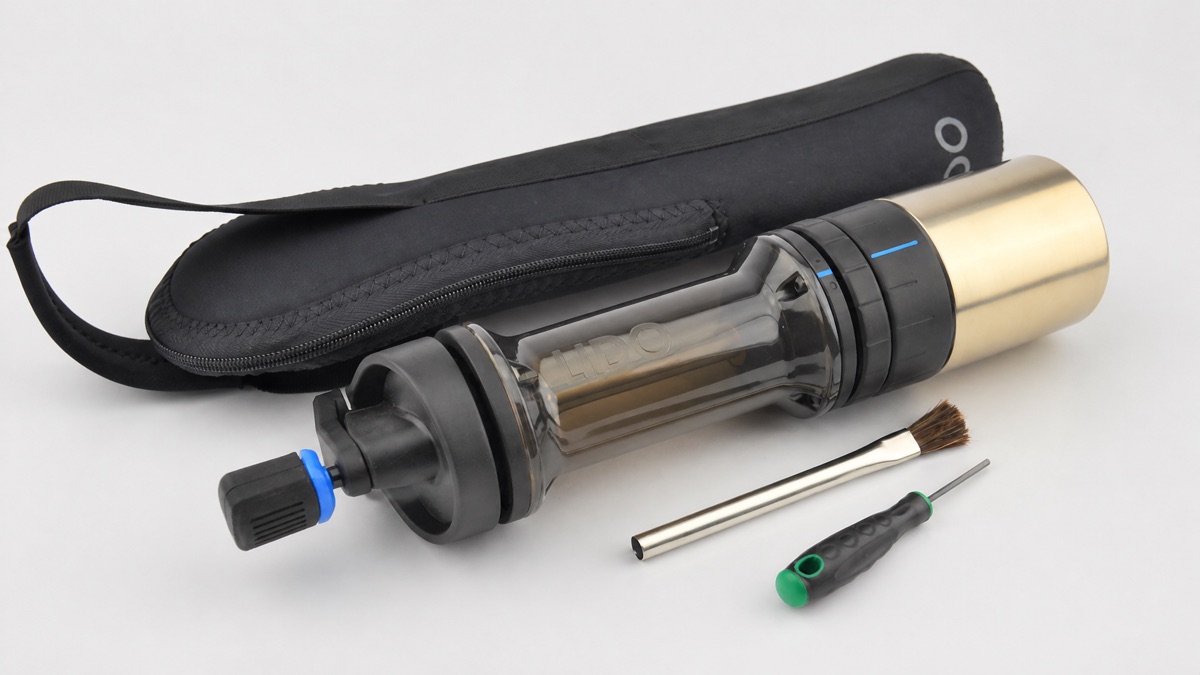
The Lido coffee grinder is a line of manual conical-burr hand grinders made by Orphan Espresso in Idaho. The Lido 3, Lido E, Lido E-T and Lido OG share a large steel burr and a stepless adjustment ring. Prices run from about $180 to $285.
The Lido grinds about 1 g (0.04 oz) per second and holds 70 g (2.5 oz) of beans. Its 48 mm Swiss burrs give an even grind with little wobble. The Lido E-T and Lido E suit espresso, while the Lido 3 suits filter coffee. The adjustment ring has no markings.
The Lido is large and heavy, so it fits big batches better than backpacks. I review burr quality, grind adjustment and capacity, and no sponsor shaped what I wrote.
What Is the Lido Coffee Grinder?
The Lido coffee grinder is a line of manual conical-burr hand grinders made by Orphan Espresso. The line includes the Lido 3, Lido E, Lido E-T and Lido OG. The Lido 3, E and E-T each pair a 70 g (2.5 oz) hopper with a stepless adjustment ring.
Prima Coffee reports that the Lido E, E-T and 3 stand up to electric home grinders. The Coffee Folk calls the Lido 3 a tank of a hand grinder. Its grind is consistent and its burrs stay stable.
The Lido suits coffee lovers who want a premium hand grinder with large capacity. Beginners may find the price steep. The Lido is not an entry-level grinder.
Orphan Espresso built the Pharos in 2011, then the Lido 1, Lido 2 and Lido 3. The Lido 3 reached buyers in spring 2015. The Lido E followed in September 2015.
Who Makes the Lido Coffee Grinder?
Orphan Espresso makes the Lido coffee grinder at its small family company in northern Idaho. Doug and Barb Garrott run the business. They started by supplying parts to repair vintage espresso machines.
The company built the Pharos with 68 mm (2.7 in) conical burrs in 2011. The Lido 1 followed as a smaller cupping grinder, and the Lido line grew from that design.
A grinder depends on its burrs, and the company did not make these itself. Christian Etzinger, a Swiss burr maker, supplies the burr set. Baratza co-founder Kyle Anderson introduced the Garrotts to Etzinger. Anderson also opened the door to a factory in Taiwan.
Orphan Espresso also supports the grinder after the sale. Its site publishes manuals, parts schematics and video guides for the Lido OG. Replacement parts are sold there too.
How Do the Lido 3, Lido E, Lido E-T and Lido OG Differ?
The Lido 3, Lido E, Lido E-T and Lido OG differ in handle type, adjustment thread pitch and body material. The Lido 3 has a folding handle and a neoprene carry case. Prima Coffee recommends it mainly for filter coffee.
The Lido E-T shares the folding handle. Its adjustment thread is finer, so a turn of the ring changes grind size less. That suits small espresso adjustments.
The Lido E has a fixed handle and no carry case. It ships with a base that steadies the grinder. A funnel also lets the user fill a portafilter straight from the catch jar.
Lido Models Compared:
| Model | Handle | Extras | Best For | Price |
|---|---|---|---|---|
| Lido 3 | Folding | Neoprene case | Filter coffee | $180-$195 |
| Lido E-T | Folding | Finer thread pitch | Espresso and travel | $195 |
| Lido E | Fixed | Base and funnel | Espresso at home | Not listed |
| Lido OG | Fixed | Aluminum body | Durable build | $285 |
The Lido OG is the newer aluminum-bodied model with a fixed handle. It shares the Etzinger burr set and the knob with earlier Lidos but is otherwise a different grinder. The Lido 3 weighs 2 lb 5 oz (1.05 kg).
The Lido E cut the adjustment thread pitch from 2 mm to 1 mm. Daily Coffee News reports that this makes fine-grind adjustment four or five times more precise. An extra bearing adds alignment precision.
How Does the Lido Coffee Grinder Work?
The Lido coffee grinder works by turning a 48 mm (1.9 in) conical steel burr with a hand crank. The burr sits inside a hopper that holds 70 g (2.5 oz) of beans. Ground coffee drops into a stainless steel catch jar below.
Beans fall by gravity into the gap between the burrs, and the crank crushes them there. The adjustment ring sets the size of that gap. A smaller gap gives a finer grind.
Two bearings hold the shaft, one at the top and one at the bottom. The shaft stays centered while the crank turns. That limits burr wobble.
The body mixes BPA-free plastic with metal parts. Prima Coffee lists plastic, stainless steel, aluminum and silicone. The mix keeps the Lido durable.
The Lido 3 ships with a bristle brush, a hex tool, a silicone hopper lid and a neoprene case.
How Do You Adjust the Lido Grind Size?
To adjust the Lido grind size, loosen the locking ring, turn the size ring and tighten the locking ring again. Two rings sit under the hopper. The upper ring is aluminum and locks the setting.
The adjustment is stepless, so any size between two settings is possible. Turning the ring counterclockwise gives a coarser grind. Turning it clockwise gives a finer one.
The grinder reaches zero when the adjustment ring stops spinning. Two blue lines also line up at zero. Orphan Espresso suggests a piece of tape to mark a favorite setting.
Steps:
- Loosen the aluminum locking ring.
- Turn the grind size ring to the wanted setting.
- Tighten the locking ring again.
- Mark the setting with tape for next time.
The ring carries no grind markings, so switching between brew methods is finicky. That is the most common complaint against the Lido.
What Burrs Does the Lido Use?
The Lido 3 uses 48 mm (1.9 in) hardened steel conical burrs made by Etzinger in Switzerland. The burr is large for a hand grinder. The size lets the Lido grind quickly.
The Lido 2 first used Italmill burrs. Their manufacturing tolerances were uneven, so the parts did not always match closely. Etzinger burrs took over from the Lido 3.
Doug Garrott says the precise burrs made the grinder easier to assemble. They also made alignment more straightforward. Espresso became easier to turn.
How Good Is the Lido Coffee Grinder at Grinding?
The Lido coffee grinder grinds very evenly for a hand grinder across filter and immersion sizes. The Coffee Folk calls the Lido 3 grind uniformity superb. Black Ink rates its performance 4.3 out of 5.
The Coffee Compass tested this with a sieve. It sifted Lido 2 grounds through a 125 micron sieve to catch the fines. The fines landed within 0.1 g of a Mahlkonig Guatemala. That electric grinder costs far more.
Black Ink says the Lido 3 beats many entry-level electric grinders. It may not match other premium grinders for uniformity. Black Ink still uses the Lido 3 to test its own coffee.
The Lido grinds from espresso sizes to French press and cold brew sizes. The stable shaft helps across the whole range. The Coffee Folk reports little grind retention, which means few grounds stay stuck inside the grinder.
Can the Lido Grind for Espresso?
Yes. The Lido can grind fine enough for espresso, but the Lido 3 suits filter coffee better. Prima Coffee and The Coffee Folk both steer espresso buyers to the Lido E-T or Lido E.
The reason is the thread pitch. This is the spacing of the threads that move the burrs closer together or farther apart. The Lido E-T and Lido E use a finer pitch. Small turns of the ring change the grind only slightly, and that helps a buyer dial in an espresso shot.
The Lido E also adds a funnel that screws onto the catch jar. Grounds pour straight into a portafilter basket, which is the metal cup that holds coffee in an espresso machine.
Turning the handle matters too, because espresso grinding on the Lido 2 was hard work. Orphan Espresso says the original Italmill burr made it harder still. The Etzinger burr made espresso easier to turn.
How Fast Does the Lido Grind?
The Lido grind is fast, at about 1 g (0.04 oz) of coffee per second. A 20 to 30 g (0.7 to 1.1 oz) dose therefore takes 20 to 30 seconds. A Lido 2 tester measured a little over 1 second per gram of dark roast.
Speed also depends on the hand turning the crank. Cranking at a brisk 100 rpm makes grinding easier. Orphan Espresso recommends a fast, steady turn.
The large burrs help most when the dose is big. Bigger batches are more bearable than on small hand grinders. The Coffee Folk values that edge for Chemex and French press doses.
How Big Is the Lido Coffee Grinder?
The Lido coffee grinder is a big hand grinder at 13.5 in (34 cm) tall and 3 in (7.6 cm) wide. The Lido 3 weighs 2 lb 5 oz (1.05 kg). The hopper holds 70 g (2.5 oz) of beans.
A Home-Barista member weighed a Lido 3 at 978 g (2.2 lb) without its 68.5 g (2.4 oz) silicone stopper. The Lido 3 is about 600 g (1.3 lb) lighter than the 1.6 kg (3.5 lb) Lido 2. Orphan Espresso made the Lido 2 heavy on purpose. A lighter travel grinder was always planned.
The hopper is large for a hand grinder. The Coffee Folk calls the 70 g capacity a whopping capacity for a premium hand grinder. Large French press and cold brew doses fit in one go.
Most home recipes use far less than 70 g. AeroPress takes 16.5 g (0.6 oz), espresso 18 g (0.6 oz) and Kalita Wave 32 g (1.1 oz). Many users never fill the hopper.
A full hopper can cause a problem. Beans can pop out of the hopper above about 60 g (2.1 oz). The silicone lid prevents that.
Lido 3 Specs:
| Spec | Value |
|---|---|
| Height | 13.5 in (34 cm) |
| Diameter | 3 in (7.6 cm) |
| Weight | 2 lb 5 oz (1.05 kg) |
| Hopper | 70 g (2.5 oz) |
| Burrs | 48 mm (1.9 in) steel conical |
| Warranty | 1 year limited |
Is the Lido Portable?
Yes. The Lido is portable, but only the Lido 3 and Lido E-T fold, and both stay large and heavy. The folding handle and neoprene case fit a suitcase.
Black Ink advises against the Lido 3 for backpacking. Strict airline weight limits also count against it. The grinder takes real room in a bag.
Orphan Espresso introduced the Lido 3 as the travel version. It trimmed about 600 g (1.3 lb) off the Lido 2. The Coffee Folk still calls almost any other hand grinder a better travel pick.
What Problems Does the Lido Coffee Grinder Have?
The Lido coffee grinder has a few known problems, led by an awkward grind adjustment and wearing catch jar threads. The adjustment ring has no markings. The locking ring sits right beside the size ring.
The plastic catch cup threads on the Lido 3 can wear after about a year. Orphan Espresso sells a replacement stainless steel jar. The jar removes the issue.
The handle can loosen with use. A hex screw supplied with the grinder tightens it again.
A stuck adjustment ring loosens with a rubber band wrapped around it for grip. Over-tightening the ring causes the problem.
Burrs can grate on each other if misaligned. Realigning the burrs fixes it.
Common Problems and Fixes:
- Worn catch jar threads: fit a stainless steel jar
- Loose handle: tighten the hex screw
- Stuck adjustment ring: wrap a rubber band for grip
- Grating burrs: realign the burrs
Static can make grounds cling to the catch jar, a trait the Coffee Compass noted on the Lido 2. A couple of drops of water on the beans before grinding cuts it.
How Do You Clean the Lido?
The Lido needs only a brush after each grind for daily cleaning. A hand air blower also works well. Manual grinders need far less care than electric ones.
The included hex tool removes the washer and screw below the adjustment ring. That frees the ring for brushing.
A full clean removes the top bearing plate and the handle. That opens the hopper for a wipe with a soft cloth.
Black Ink warns against water. Parts that do not dry fully can cause trouble later.
How Does the Lido Coffee Grinder Compare to Rivals?
The Lido coffee grinder beats its premium hand grinder rivals on hopper size and matches the best on burr size. The 1Zpresso JX-Pro also uses 48 mm (1.9 in) burrs. Its hopper holds only 30 to 35 g (1.1 to 1.2 oz).
The Comandante C40 holds about 40 g (1.4 oz) and costs from about $277 to $319. It is more portable than the Lido. Its grind is very close to the Lido 3.
The Kinu M47 Phoenix lists at about $214 at one US retailer, close to the Lido 3. Retailers quote 30 to 60 g (1.1 to 2.1 oz) of capacity. It carries a 5 year warranty.
The 1Zpresso JX-Pro has 150 clicks at 12.5 microns each. Its marked clicks make settings easy to repeat. The Lido ring has no markings.
The Timemore Chestnut C2 uses 38 mm (1.5 in) burrs and costs about $60. It is lighter and more compact. It is also less consistent at coarse sizes.
Rival Hand Grinders:
| Grinder | Burr | Capacity | Price |
|---|---|---|---|
| Lido 3 | 48 mm (1.9 in) | 70 g (2.5 oz) | $180-$195 |
| Comandante C40 | Not listed | 40 g (1.4 oz) | $277-$319 |
| Kinu M47 Phoenix | 47 mm (1.9 in) | 30-60 g (1.1-2.1 oz) | $214 |
| 1Zpresso JX-Pro | 48 mm (1.9 in) | 30-35 g (1.1-1.2 oz) | Not listed |
| Timemore Chestnut C2 | 38 mm (1.5 in) | Not listed | $60 |
Is the Lido Better Than an Electric Baratza Encore?
No. The Lido is not better than the electric Baratza Encore on convenience, but it gives a more even grind. The Encore grinds a dose in seconds at the press of a button.
The Lido 3 has 48 mm (1.9 in) burrs, the metal parts that crush the beans. Its adjustment is stepless, so the setting can be placed anywhere between two points. The Encore has 40 mm (1.6 in) burrs and 40 grind steps. The Lido gives a more even grind with fewer fines.
That quality has a time cost. The Lido needs 20 to 30 seconds of cranking per dose, and the work is done by hand.
Price does not separate the two much. The Encore costs about $150, a little less than the Lido.
The motor does matter for durability. The Lido has no motor or electronics that can fail, which gives it an edge on long-term durability. The Encore relies on both.
How Much Does the Lido Coffee Grinder Cost?
The Lido coffee grinder costs about $180 to $195 for the Lido 3 and about $285 for the Lido OG. Prima Coffee lists the Lido E-T at $195. These prices put the line in the premium hand grinder bracket.
The Lido line has sat above entry-level hand grinders for years. The Lido 2 cost $175 in 2015, so the brand has held a higher price point for a long time.
Buyers who want to pay less can look at used grinders. Used Lido grinders appear on coffee forums such as Home-Barista and in buy and sell groups. Buyers have found them at a significant discount. The grinders are built to last, which is why a used one can still work well.
Does the Lido Coffee Grinder Have a Warranty?
Yes. The Lido coffee grinder has a 1 year limited warranty when bought from the Orphan Espresso website. Orphan Espresso also sells replacement parts for the Lido 3 on its site.
A warranty ends after a set time, so repair support matters once it runs out. For the Lido OG, the company publishes manuals, parts schematics and assembly videos. Parts and guides keep an older grinder in service.
The Kinu M47 Phoenix offers a longer warranty than the Lido. It carries a 5 year warranty, which is four years longer than the Lido's 1 year.
Is the Lido Coffee Grinder Worth It?
Yes. The Lido coffee grinder is worth it for people who grind large batches and value consistency over compact size. Its 48 mm burrs, low wobble, large capacity and strong build justify the price.
The cons are real. The grinder is large and heavy. The adjustment is awkward. The price is high next to newer rivals.
Black Ink calls the Lido 3 well engineered. It is still not the best premium grinder against newer rivals.
The strengths still carry the verdict. A buyer gets quick, even grinding and a body built to last for years.
Pros:
- Large 48 mm Swiss burrs
- Very little burr wobble
- Quick grinding
- 70 g hopper
- Stepless adjustment
Cons:
- Large and heavy
- Unmarked adjustment ring
- Plastic catch jar threads can wear
- High price against newer rivals
Who Should Buy the Lido?
A buyer should buy the Lido when brewing large batches in a Chemex, French press or batch brewer with a premium grind in mind. The big hopper and fast burr suit those doses.
A large batch needs a lot of beans ground at once. The big hopper holds that much coffee, and the fast burr finishes the job without a long wait.
Some buyers are better served by other grinders. Beginners, budget buyers and weight-conscious travelers fall in this group. The size, price and adjustment ring count against them.
The model also matters, because the Lido line splits by brew style. The Lido 3 suits filter coffee. The Lido E-T or Lido E suit espresso better.
The Coffee Experiment is a reader-supported platform. Purchases made through our links may earn us an affiliate commission at no extra cost to you.