
Thanks for being here, Mark here. I was on shift the year the Specialty Coffee Association was formed, and bullet-style blenders have moved on since.
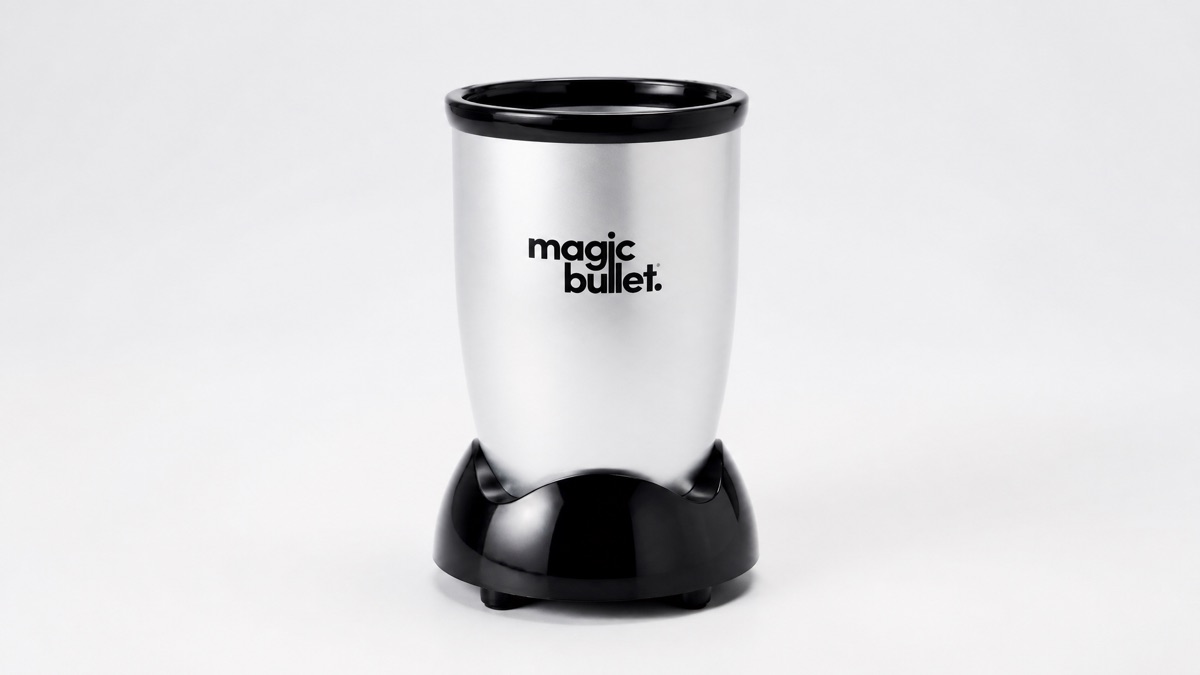
The Magic Bullet coffee grinder is a compact personal blender that grinds coffee beans when fitted with its flat blade. The 11-piece set runs a 250 W base. Magic Bullet sells it for smoothies, so coffee is a side job.
The blender works as a blade grinder, so the grounds come out uneven. Coarse grinds for French press and cold brew work well. Medium grinds are workable for drip coffee. Espresso is out of reach, and long runs heat the beans.
A flat blade costs about $8 to $12, and the 11-piece set ships with a cross blade only. A $30 hand grinder grinds more evenly than the blender. Read on for the technique, the real limits and a clear verdict. Nobody sponsored this review, and Magic Bullet never saw it before publishing.
What Is the Magic Bullet Coffee Grinder?
The Magic Bullet coffee grinder is a compact personal blender used with its flat blade to grind coffee beans. The base runs at 250 W in the 11-piece set, while older sets list 200 W. Magic Bullet sells it as a blender, so coffee grinding is a side use.
Owners reach for it when a regular grinder breaks or when travel leaves no room for a second appliance. The blender also chops spices, grains and nuts. The same dry-grinding job applies to all of them.
The Magic Bullet is the original bullet-style blender. Homeland Housewares launched it in October 2003. NutriBullet models came later as a sister brand. Those larger bases are much more powerful, and the NutriBullet RX reaches 1,700 W.
Pulse timing and fill level decide the result. Careful technique matters more here than on a dedicated grinder.
Is the Magic Bullet a Blade Grinder?
Yes. The Magic Bullet works as a blade grinder, because a spinning steel blade chops the beans with no burrs and no gap setting. Blade grinders cut beans rather than crush them.
Because the blade simply slices whatever it hits, it cannot control the size of the pieces. Some pieces come out coarse and others fine, and the mix shifts from batch to batch. The Magic Bullet follows the same pattern.
Burr grinders work differently. They crush beans between two surfaces set to a fixed gap, so every piece passes through the same opening. That design makes the grounds uniform, and a blade cannot match that control.
Uneven grounds matter least with forgiving brew methods. French press and cold brew hide the spread in particle size. Pour-over and AeroPress expose it.
How Does the Magic Bullet Grind Coffee?
The Magic Bullet grinds coffee when the base spins the blade at high speed and the blade hits the beans. The beans break into smaller pieces on each impact. More impacts give a finer grind.
The grind depends on how many times the blade hits the beans. So the user needs a way to control the spinning. The blender has no buttons. Pressing the cup down onto the base starts the motor. Releasing the cup stops it, so each press and release makes one pulse.
Run time, pulse count and fill level set the grind size. A longer run gives finer grounds. Shorter pulses keep the grind coarse.
Long runs add impacts, but they also keep the motor working without a break. The manual advises no more than about one minute of continuous running. A rest between runs protects the base.
Which Magic Bullet Blade Grinds Coffee?
The flat blade is the Magic Bullet blade that grinds coffee. Magic Bullet also calls it the milling blade. Dry foods such as coffee, spices and grains belong under the flat blade.
The cross blade looks like an X. Smoothies, sauces and salsa are its job. Dry beans are a poor fit for it, because it gives an uneven grind.
Not every set holds both blades, so the contents matter before buying. The 11-piece set, model MBR-1101, ships with a cross blade only. The 17-piece set lists both a flat blade and a cross blade.
A set with no flat blade does not leave the owner stuck. A replacement flat blade costs about $8 to $12. Compatible blades are sold as add-ons, so a lost blade costs little to replace.
The cross blade alone can still crack beans. The grind comes out more uneven, with more dust and more large pieces. Using fewer beans, shorter pulses and more shaking helps. For regular use, buying a flat blade is the better choice.
How Do You Grind Coffee in a Magic Bullet?
Grinding coffee in a Magic Bullet takes the flat blade, the short cup and a few short pulses. The short cup keeps the beans close to the blade. That gives a more controlled grind than the tall cup.
Fill the cup no more than halfway. That means about 2 to 3 tablespoons (30 to 45 ml) of whole beans. An overfull cup leaves whole beans on top and powder at the bottom.
Pulse for 3 to 5 seconds at a time. Flip the cup upright and shake it after each pulse. The shake moves large pieces back down to the blade.
Check the grounds after 4 to 5 pulses. A coarse grind takes under 45 seconds in total. A medium grind takes 60 to 75 seconds with rests.
Steps:
- Fit the flat blade to the short cup.
- Fill the cup no more than halfway with whole beans.
- Pulse for 3 to 5 seconds at a time.
- Flip the cup upright and shake it after each pulse.
- Check the grounds after 4 to 5 pulses and stop at the size you want.
What Grind Sizes Can the Magic Bullet Make?
The Magic Bullet makes coarse and medium grinds, and it has no setting to choose between them. Run time decides the size. Results change with every batch.
Because time is the only control, guides give timing numbers, and they disagree. CoffeeGeek gives 8 to 10 pulses for coarse and 20 to 25 seconds for medium. It puts fine at 30 to 40 seconds. Fluent in Coffee advises against espresso-fine grinding.
A medium grind takes more pulses and more shaking than a coarse one. Drip machines and moka pots accept the result. The cup still tastes a little different from batch to batch.
Coarse grounds also suit percolators, and medium-coarse grounds suit Chemex. Turkish coffee needs an extra fine powder, and the Magic Bullet cannot make that evenly.
The uneven pieces matter most when the brew method rewards an even grind. Pour-over and AeroPress are those methods, so the uneven pieces show up in the cup. French press and cold brew suit the Magic Bullet best.
Brew Method Fit:
| Brew Method | Grind Needed | Magic Bullet Fit |
|---|---|---|
| French press | Coarse | Good |
| Cold brew | Extra coarse | Good |
| Drip machine | Medium | Workable |
| Pour-over and AeroPress | Medium to medium-fine | Uneven |
| Espresso | Fine | No |
Can the Magic Bullet Grind Coarse for French Press?
Yes. The Magic Bullet grinds coarse for French press after four or five short pulses with shaking in between. The result is a chunky grind of mixed pieces.
French press tolerates those uneven pieces. The brew is an immersion brew, so the grounds sit in the water the whole time. Every piece gets enough time to extract, whatever its size. The random cuts of the blade do the least harm in this method.
Cold brew uses the same coarse grind. It steeps for a long time, which hides small differences in particle size. A wide-mouth jar works as the brewing vessel.
The grind does have one flaw. Some dust always mixes in with the coarse pieces. These fines cloud the cup.
Can the Magic Bullet Grind Fine for Espresso?
No. The Magic Bullet cannot grind fine enough for espresso, because espresso needs a fine and even grind. A blade makes neither.
A fine grind needs long running. The motor warms up during that time. The grounds warm up too, and friction slightly toasts them.
CoffeeGeek says 30 to 40 seconds reaches a fine grind. The result stays inconsistent, and the long run stresses the machine.
Espresso is unforgiving. A burr grinder around $150 can still struggle to dial it in. A blade grinder sits well outside that range. Espresso drinkers should buy a burr grinder.
How Even Is the Magic Bullet Grind?
The Magic Bullet grind is not even, with boulders and dust in the same batch. No blade grinder reaches burr consistency. The Magic Bullet is no exception.
Shaking between pulses improves the spread a little. Larger pieces fall back down toward the blade. The smallest pieces get hit again and turn to powder.
Batch size changes how well this works. Small batches grind more evenly than a full cup. Beans have room to move and meet the blade. A cup full of beans leaves a dead zone at the top, where beans never reach the blade.
The uneven grounds matter because they extract unevenly. Fine pieces over-extract and taste bitter. Large pieces under-extract and taste sour. Both happen in the same cup, so the same beans can taste different from one day to the next.
Does the Magic Bullet Heat the Beans?
Yes. The Magic Bullet heats the beans when the blade runs for a long time. Friction warms the cup and the grounds.
Continuous running heats the beans, stresses the motor and gives an uneven result. A held button is the common mistake. Pulsing avoids it.
Pulse grinding with rests keeps the cup cool. Each rest gives the motor and the grounds time to shed heat. A few seconds between runs is enough.
A warm cup is a warning sign. A hot cup is a problem. Stop and let the base cool before the next run.
What Are the Magic Bullet Specs and Price?
The Magic Bullet specs and price come to a 250 W high-torque base and two cups for about $40 to $60. The 11-piece set, model MBR-1101, has an 18 oz (530 ml) tall cup and a 12 oz (355 ml) short one. Older sets list 200 W. The party mug holds 18 oz (530 ml).
The 11-piece set includes the base, two cups, a party mug, lip rings, lids and a recipe guide. The 17-piece set adds more mugs and lists a flat blade. A buyer should check which blade comes in the box.
The cups are made of high-impact BPA-free plastic. The drive gear is plastic too. Plastic gears wear faster than metal ones under heavy loads.
Magic Bullet backs the blender with a one-year limited warranty covering defects in materials and workmanship. Blades and other wear parts are usually bought separately. A flat blade is the part coffee drinkers need.
Key Specs:
| Part | Spec |
|---|---|
| Motor base | 250 W |
| Tall cup | 18 oz (530 ml) |
| Short cup | 12 oz (355 ml) |
| Party mug | 18 oz (530 ml) |
| Warranty | One year, limited |
How Much Does the Magic Bullet Cost?
The Magic Bullet 11-piece set costs about $40 to $60, depending on the listing and the day. Prices of $40 and $59.96 both appear. The price swings with sales.
A buyer might expect a price this low to come with weak reviews. The set has more than 118,000 ratings with a 4.4-star average. The score covers smoothies and chopping. Coffee grinding is a small share of them.
Grinding coffee every day wears the blade faster than those other jobs. A replacement flat blade costs about $8 to $12. That adds little to the cost of ownership.
Someone who wants coffee only has a cheaper option than the blender. A $30 hand grinder costs less than the blender. The hand grinder also grinds more evenly. That buyer should skip the blender.
How Does the Magic Bullet Compare to Other Grinders?
The Magic Bullet compares poorly to dedicated grinders and fairly to other personal blenders. Burr grinders beat it on consistency. Blade grinders match its grind and add a purpose-built bowl.
The Black+Decker CBG110SC is a dedicated blade grinder. It has a lid lock, a stainless steel bowl and a one-touch pulse control. Its motor is 130 W, and retail prices run about $21 to $34.
Burr grinders give uniform grounds. The Oxo Brew Conical Burr costs about $99, and the Baratza Encore costs about $179.
Other personal blenders differ in power. The Hamilton Beach single-serve runs at 175 W. The Bella and Farberware run at 240 W, and the Cuisinart runs at 350 W.
Grinder Comparison:
| Grinder | Type | Price |
|---|---|---|
| Magic Bullet 11-piece set | Blade | $40-$60 |
| Black+Decker CBG110SC | Blade | $21-$34 |
| Hario Mini Mill | Hand burr | $30 |
| Oxo Brew Conical Burr | Electric burr | $99 |
| Baratza Encore | Electric burr | $179 |
Is the Magic Bullet Better Than a Hand Grinder?
No. A hand grinder such as the Hario Mini Mill gives more consistent grounds than the Magic Bullet. The Mini Mill costs about $30.
The reason is how each machine cuts the bean. A hand grinder sets a fixed gap between two burrs, and the beans must pass through that gap. The setting repeats from one day to the next. The Magic Bullet uses a spinning blade. The grind depends on timing and shaking.
The Magic Bullet does win on speed for large batches. It needs no cranking. A hand grinder takes minutes to grind enough for a full pot.
Daily grinding favors the hand grinder. Blade wear and uneven cups add up within months. The $30 spend pays for itself in better coffee.
What Are the Magic Bullet Grinder Problems?
The Magic Bullet grinder has four main problems: uneven grounds, noise, leaks and motor strain. Uneven grounds come first. The blender has no grind adjustment to fix them.
The 250 W motor is loud. Anyone sleeping nearby will hear it.
Some 1-star ratings report black liquid leaking into the cup from the base. The complaint repeats across many low ratings.
Some owners report a burning smell after a few uses. A few units burn out. Overfilling and long runs are the common triggers.
Main Problems:
- Uneven grounds with no grind adjustment
- A loud 250 W motor
- Black liquid leaking from the base into the cup
- A burning smell and occasional burn-out
Will Coffee Damage the Magic Bullet?
No. Occasional coffee grinding does not damage the Magic Bullet, because the flat blade is made for dry grinding. A few batches a week stay within its limits. Burn-out reports come from overfilling and long runs.
Coffee beans are hard, so the blade takes more wear from them than from oats or flaxseed. Daily grinding dulls the flat blade faster than oats or flaxseed do. A dull blade gives a coarser, less even grind over time.
The motor is not built for a sustained load. Long runs overheat the base. Espresso-fine attempts shorten the blade's useful life within months.
The plastic drive gear wears faster than a metal gear. Heavy loads and frozen ingredients speed up that wear. Coffee in small batches is a light load, so it adds little strain to the gear.
How Do You Clean the Magic Bullet After Grinding Coffee?
Clean the Magic Bullet after grinding coffee by washing the cup, blade and lid right away. Hand washing with warm water and mild soap works. The top rack of the dishwasher also works.
Coffee oils build up on the blade and cup, and the oils change the taste of the next batch. Washing after every use prevents the buildup, so a fresh grind never carries the flavor of the last one.
Hand wash the blade right after use. A quick wash keeps the edge sharp and clears residue from the gasket. Dry every part before storing it.
The motor base is different from the other parts. It gets a damp cloth only. Unplug it first. Never submerge the base or put it in the dishwasher.
Is the Magic Bullet Worth It as a Coffee Grinder?
No. The Magic Bullet is not worth buying only as a coffee grinder, but it is worth using as a backup grinder. The blender suits coarse to medium grinds and little else.
The blender is small, easy to clean and cheap when already owned. A flat blade makes it a workable coarse grinder. A cold brew or French press batch comes out fine.
The grind is uneven and has no settings. The motor is loud and limited in run time. Espresso is out of reach.
Pros:
- Small and easy to clean
- Cheap when already owned
- Handles coarse grinds for French press and cold brew
Cons:
- Uneven grind
- No grind settings
- Loud, with a limited motor run time
- No espresso
A $30 hand grinder or a $99 burr grinder gives better coffee. A coffee-only buyer pays about $40 to $60 for the blender plus $8 to $12 for a flat blade. A hand grinder at about $30 costs less and grinds more evenly. Fresh beans ground in the Magic Bullet still beat stale pre-ground coffee.
Who Should Use the Magic Bullet for Coffee?
People who brew French press or cold brew a few times a week should use the Magic Bullet for coffee if they already own it. The coarse grind fits those brews. No extra purchase is needed.
Three other groups of coffee drinkers get different results from the Magic Bullet:
- Travelers and campers: They gain the most. One small appliance replaces a separate grinder, and the cups pack easily into a bag.
- Espresso drinkers and precise pour-over fans: Their methods expose uneven grounds, so they need a real grinder. A burr grinder fixes that problem.
- Daily grinders: Daily use dulls the blade and strains the motor, so a dedicated grinder is the better buy. A hand grinder costs about $30.
The brew method and how often the beans get ground decide which group a drinker belongs to.
The Coffee Experiment is a reader-supported platform. Purchases made through our links may earn us an affiliate commission at no extra cost to you.